Inktober 2026 for Beginners: Supplies, Plan and Tips
You can start Inktober today. All you need is a pen, some paper and a few minutes. It's October 8, so there are 24 days left in the month, and the official rules say you don't have to draw every day or follow the prompts. Make a drawing in ink, post it (or stick it on the fridge), tag it #inktober and #inktober2026, and repeat (official rules).
What you need to start
The official FAQ says any tool is acceptable, so use what you have. These are the common choices:
| Tool | Good for | Worth knowing |
|---|---|---|
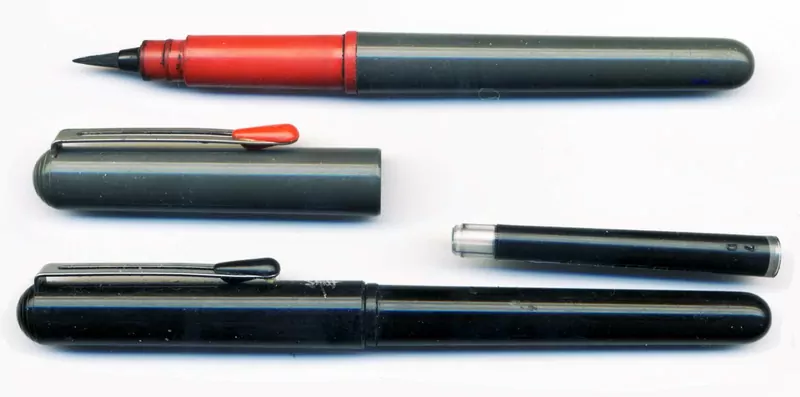
| Fineliner or "pigment liner" | Clean, even lines; small drawings | Sold in sizes like 0.1 to 0.8 mm. Most are waterproof once dry. Start with 0.3 or 0.5 mm |
| Brush pen | Lines that go thick to thin, bold black areas | Needs a lighter hand. Practice a few strokes first |
| Ballpoint or gel pen | Anything, at no cost | The FAQ says any tool counts. Good for loose sketching |
| Dip pen and ink | Classic inking with a lot of character | Slower and messier. Try it later in the month |
| Tablet and stylus | Digital inking | The FAQ says digital inking is "no less valid" than traditional |
Paper: use a sketchbook or loose sheets with a smooth surface that isn't too thin. Thin paper lets ink bleed through, so test your pen on the back of a page first. Also useful: a pencil and an eraser for the under-drawing (the FAQ says sketching first is allowed), and a ruler if you want a border.
Five inking techniques you can learn in ten minutes
- Outline (contour). Draw the shape of the object with one steady line. Don't worry if it wobbles.
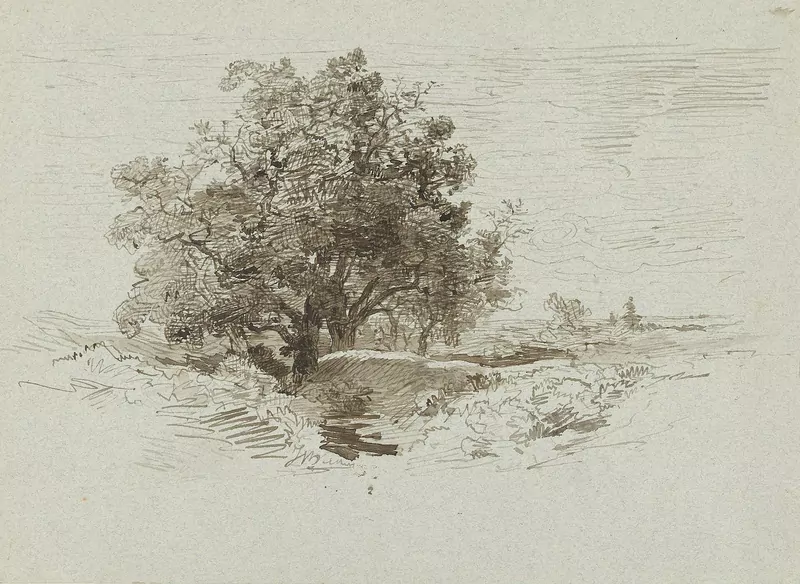
- Hatching. Fill an area with short parallel lines. Closer lines look darker. The oak drawing at the top uses short strokes for leaves and grass.
- Cross-hatching. Draw a second layer of lines across the first, at an angle, for deeper shadow.
- Stippling. Build shade with dots. Slow, but it can't smudge.
- Solid blacks. Fill the darkest spots in completely. A few solid areas make a small drawing look bold and finished.
Draw an apple and try each technique on a different one. You'll learn more from five tiny apples than from one careful one.
A 15-minute daily routine
- 2 minutes: read the prompt and make two or three tiny pencil thumbnails of ideas. Pick the simplest.
- 6 minutes: draw it lightly in pencil, at about the size of a playing card.
- 5 minutes: ink over the pencil. Start with the main shapes, then add shade.
- 2 minutes: let the ink dry, erase the pencil, and take a photo.
The time limit matters more than the quality. A drawing you finish beats one you plan forever.
Starting late: pick your pace
The rules include slower routes for people who can't draw daily: "go the half-marathon route and post every other day, or just do the 5K and post once a week", as long as you stay consistent. Here is what each pace gives you from today:
| Pace | Drawings by October 31 |
|---|---|
| Every day from today | 24 (October 8 to 31) |
| Every other day (half-marathon) | 12 (October 8, 10, 12 and so on to 30) |
| Once a week (5K) | 4 (October 8, 15, 22 and 29) |
| All 31 prompts | Possible with about 1.3 drawings a day: draw two small ones on some days |
Today's prompt is "Stinky". This week's prompts are on the full Inktober 2026 prompt list, and here are three ideas for each one. Prefer Spanish or Portuguese? See the translated prompts.
Common beginner mistakes
- Smudging. Wait for the ink to dry before you erase or touch it. Draw from the side your hand isn't going to rest on, or put a spare sheet under your hand.
- Going too big. A full page takes an evening. A small drawing is finished in minutes.
- Pressing too hard. Especially with brush pens. Light pressure gives thin lines and firm pressure thick ones.
- Waiting for it to be good. Inktober is about building the habit. The FAQ describes it as a challenge to improve your skill and build positive drawing habits, and says it is not a contest.
- Comparing yourself with others. The FAQ says there is no right or wrong way to do Inktober.
Sharing your drawings
- Where: any social account, or a fridge or a school noticeboard. You never send your work to the organizers.
- Tags: #inktober and #inktober2026, so others can find it.
- Photo tips: shoot in daylight by a window, hold the phone straight above the page, and crop out the edges of the table.
- Fan art and lettering are allowed. The FAQ says respect copyright and the original creator's wishes, and that calligraphy and lettering count.
Want lessons? Inktober's How to Ink page lists inking tutorials and courses, including one taught by Inktober's creator.
Quick answers
Can I still start Inktober?
Yes. There is no sign-up, and you can begin on any day of October.
Do I need expensive pens?
No. The FAQ says any tool of your choice is acceptable, and a cheap pen is fine.
Do I have to use the official prompts?
No. They are there to spark ideas. You can also change the order.
Can I draw in pencil?
The rules ask for a drawing in ink, but a pencil under-drawing is fine.
What if I miss a day?
Carry on. Nobody checks, and the rules allow slower paces.