Saturn at Opposition 2026: Oct 4 Rise Times, 23 Cities
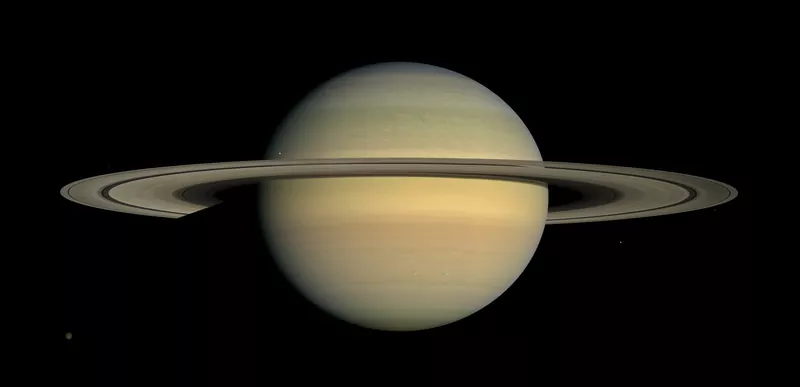
Saturn is at opposition on October 4, 2026, the moment Earth passes between the planet and the Sun. Around that night Saturn rises at sunset, stays up until sunrise and shines at its best of the year. It is about a quarter brighter than at last year's opposition, mainly because its rings are opening up.
Saturn at a glance
- Opposition: October 4, 2026, at about 12:29 UTC (some sites round it to 12:00 UTC)
- Where: in the constellation Cetus, just north of the celestial equator, so it can be seen from every inhabited continent
- Brightness: magnitude +0.3, against +0.6 at the 2025 opposition
- Distance: about 1.26 billion km (8.4 AU); its light takes about 70 minutes to reach us
- Rings: tilted about 7 degrees toward Earth, up from almost edge-on in 2025
- Moon: a waning crescent, about 37% lit, that rises around or after midnight, so the evening sky is dark
When Saturn rises and peaks in 23 cities
Saturn comes up within minutes of sunset and is highest around local midnight, so the best window is roughly 10 pm to 2 am. The times below are for the evening of October 4. Saturn sets on the morning of October 5, and its highest point falls near midnight: a little before it in some cities, a little after it in others.
| City | Rises | Highest | Sets | Height |
|---|---|---|---|---|
| Los Angeles | 6:35 pm | 12:42 am | 6:49 am | 58° |
| Mexico City | 6:22 pm | 12:26 am | 6:30 am | 73° |
| New York | 6:37 pm | 12:46 am | 6:54 am | 51° |
| São Paulo | 5:58 pm | 11:56 pm | 5:54 am | 64° |
| Casablanca | 6:14 pm | 12:21 am | 6:28 am | 58° |
| London | 6:39 pm | 12:51 am | 7:03 am | 40° |
| Lagos | 6:35 pm | 12:37 am | 6:39 am | 85° |
| Algiers | 6:31 pm | 12:38 am | 6:46 am | 55° |
| Johannesburg | 6:01 pm | 11:59 pm | 5:56 am | 62° |
| Cairo | 6:40 pm | 12:46 am | 6:52 am | 62° |
| Istanbul | 6:46 pm | 12:55 am | 7:04 am | 51° |
| Nairobi | 6:23 pm | 12:24 am | 6:25 am | 87° |
| Riyadh | 5:39 pm | 11:44 pm | 5:49 am | 67° |
| Dubai | 6:05 pm | 12:10 am | 6:15 am | 67° |
| Karachi | 6:18 pm | 12:23 am | 6:28 am | 67° |
| Delhi | 6:07 pm | 12:13 am | 6:18 am | 63° |
| Dhaka | 5:45 pm | 11:50 pm | 5:55 am | 68° |
| Jakarta | 5:44 pm | 11:44 pm | 5:45 am | 82° |
| Kuala Lumpur | 7:03 pm | 1:05 am | 7:07 am | 89° |
| Singapore | 6:55 pm | 12:56 am | 6:58 am | 89° |
| Manila | 5:45 pm | 11:48 pm | 5:51 am | 77° |
| Tokyo | 5:26 pm | 11:33 pm | 5:41 am | 56° |
| Sydney | 6:51 pm | 12:47 am | 6:44 am | 54° |
Local clock times, with daylight saving time where it applies; Morocco moved to GMT on September 20, 2026. Height is the angle above the horizon at the highest point. Calculated for this page with the Skyfield library and NASA JPL's DE421 planetary ephemeris, and checked against a second astronomy library; expect a difference of a minute or two with a flat horizon.
How to see it
Face east after sunset. Saturn looks like a steady golden-white star that does not twinkle; from the Northern Hemisphere it climbs toward the south by midnight, from the Southern Hemisphere toward the north, and near the equator it passes almost overhead. Binoculars show a small oval, but not the rings. To see the rings you need a telescope at around 30x or more, which also shows Saturn's largest moon, Titan, as a faint star close by.
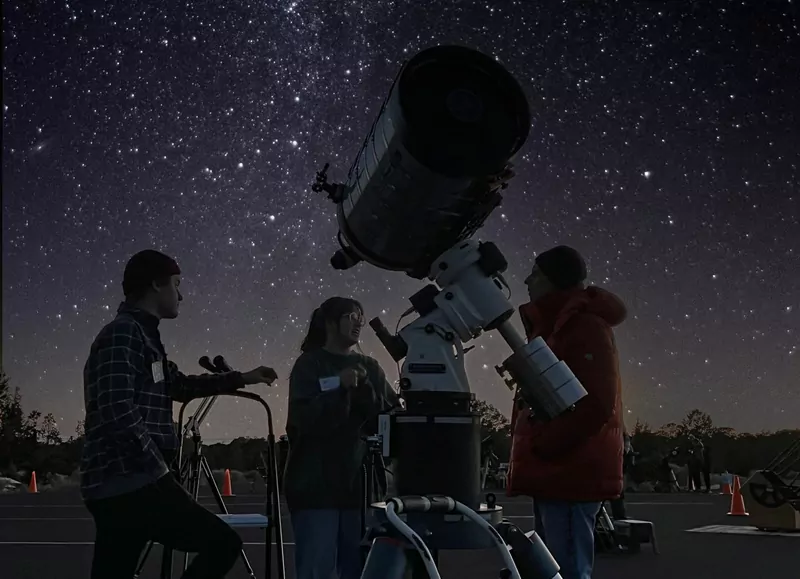
You do not need a perfect night. Saturn stays nearly as bright for a few weeks on either side of October 4, so a cloudy evening is not a lost chance.
What the rings look like now
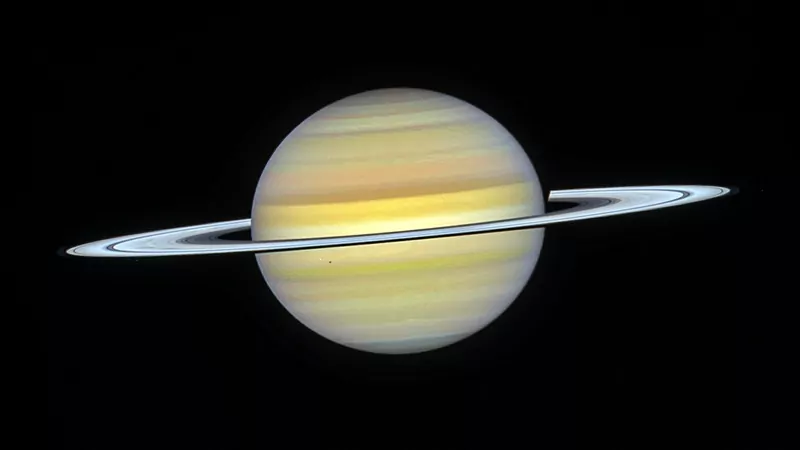
In March 2025 Earth crossed the plane of Saturn's rings and they were almost edge-on. Since then they have been opening, from about 2 degrees at the 2025 opposition to about 7 degrees now. The next opposition, on October 18, 2027, will be brighter again at about magnitude +0.1, with the rings tilted about 13 degrees.
Opposition date cross-checked with EarthSky.