Northern Lights Forecast: Oct 9 Storm and How to Watch
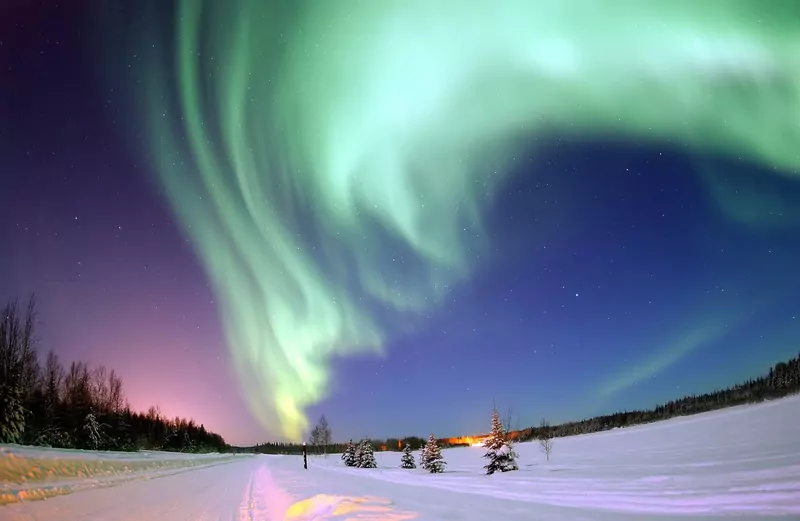
NOAA expects a minor to moderate (G1 to G2) geomagnetic storm on October 9 (UTC), which could push the northern lights south of their usual range. The cause is a coronal mass ejection (CME) the Sun threw off on October 6. The new moon on October 10 keeps the sky dark. Forecasts like this are uncertain, so check the live NOAA links below on the day.
For North America, the best chance is the night of Thursday, October 8 into the early hours of Friday, October 9, local time. Details below. This page is updated as NOAA's forecast changes.
What NOAA is forecasting
From the Space Weather Prediction Center's 3-day forecast, issued October 7 at 12:30 UTC:
- The CME is expected to arrive early on October 9 (UTC). Until then conditions are quiet.
- The highest expected Kp for October 7 to 9 is 5.67 (G2, moderate).
- A second, narrow CME from October 6 mostly missed Earth to the north. It may add a glancing blow.
| Oct 9, UTC | Expected Kp |
|---|---|
| 00:00 to 03:00 | 1.67 |
| 03:00 to 06:00 | 5.00 (G1) |
| 06:00 to 09:00 | 4.33 |
| 09:00 to 12:00 | 5.67 (G2) |
| 12:00 to 15:00 | 4.00 |
| 15:00 to 21:00 | 3.00 |
| 21:00 to 24:00 | 4.00 |
NOAA lists the arrival as "early on 09 Oct". CME arrival times can be off by many hours, so the strongest part could come earlier or later than the table shows.
When that is where you live
| Place | 03:00 to 06:00 UTC (G1) | 09:00 to 12:00 UTC (G2) |
|---|---|---|
| New York, Toronto | Thu 11pm to 2am | Fri 5 to 8am |
| Chicago | Thu 10pm to 1am | Fri 4 to 7am |
| Denver | Thu 9pm to midnight | Fri 3 to 6am |
| Los Angeles | Thu 8 to 11pm | Fri 2 to 5am |
| Anchorage | Thu 7 to 10pm | Fri 1 to 4am |
| Reykjavik | Fri 3 to 6am | Fri 9am to noon (daylight) |
| London | Fri 4 to 7am | Fri 10am to 1pm (daylight) |
| Oslo | Fri 5 to 8am | Fri 11am to 2pm (daylight) |
| Hobart | Fri 2 to 5pm (daylight) | Fri 8 to 11pm |
| Auckland | Fri 4 to 7pm (daylight) | Fri 10pm to 1am |
Local times assume daylight saving where it applies. The aurora is only visible in the dark, so the strongest window falls in daylight in Europe, but at night in New Zealand and Tasmania, and in the small hours for western North America. For the eastern US and Canada it lands just before dawn.
What G1 and G2 mean for where you can see it
NOAA's storm scale lists how far from the poles the aurora has been seen at each level:
| Level | Kp | Aurora has been seen as far south as |
|---|---|---|
| G1, minor | 5 | Commonly visible at high latitudes, such as northern Michigan and Maine |
| G2, moderate | 6 | New York and Idaho |
| G3, strong | 7 | Illinois and Oregon |
| G4, severe | 8, or 9 minus | Alabama and northern California |
| G5, extreme | 9 | Florida and southern Texas |
Source: NOAA Space Weather Scales. The same logic applies in the southern hemisphere, and in Europe and Asia, where the key number is your geomagnetic latitude, not your map latitude. NOAA says the relationship between Kp and the aurora is approximate: at Kp 0 the aurora's edge is near 66 degrees geomagnetic latitude, and it moves about 2 degrees toward the equator for each step up in Kp, reaching 48 degrees at Kp 9 (NOAA tips).
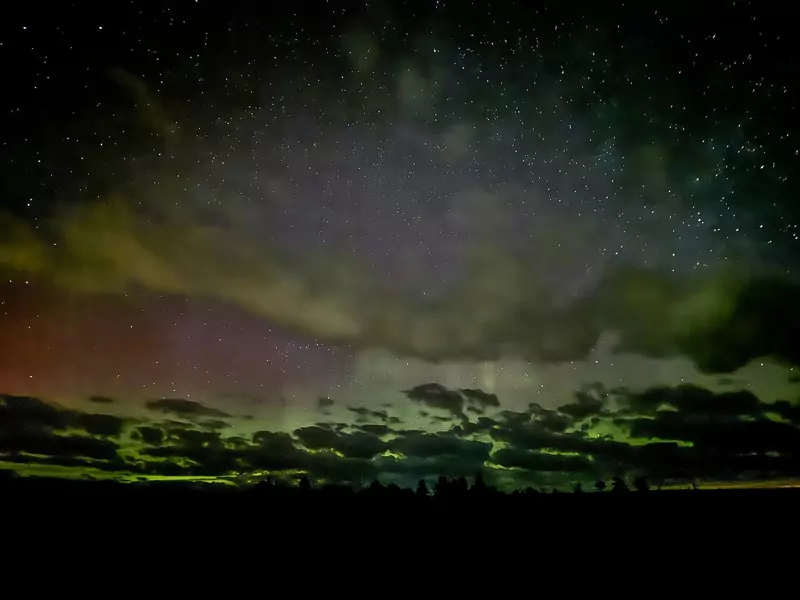
A G1 or G2 storm is not a guarantee. It means a good chance for people in the northern tier of the US, Canada, the UK's north, Scandinavia and similar latitudes, and a faint glow near the northern horizon, sometimes only visible to a camera, for people farther south.
How to check if it's happening tonight
- Start with the NOAA aurora dashboard. It shows tonight's and tomorrow night's "viewline", plus the live Kp.
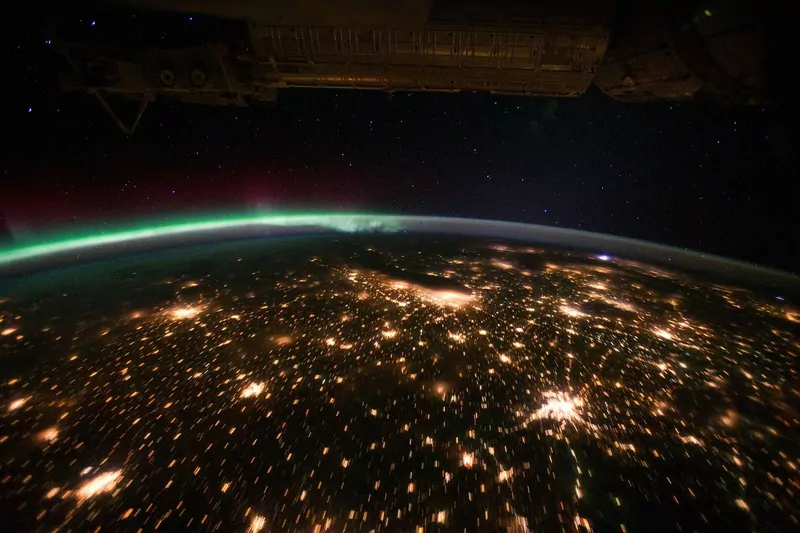
- Watch the 30-minute aurora forecast. The green oval turns red where aurora is forecast to be more intense. NOAA says you can see aurora from up to about 1,000 km (600 miles) away when it is bright and conditions are right, so it doesn't need to be overhead.
- Check the live planetary K-index. It updates every minute.
- Look at your cloud forecast. Clear skies matter as much as the storm.
- Go outside, let your eyes adjust for 15 to 20 minutes, and face north (south if you are in the southern hemisphere).
Outside the US: AuroraWatch UK and the Met Office space weather forecast cover Britain, and Australia's Bureau of Meteorology Space Weather Services covers the southern lights.
Dark skies: the new moon helps
A bright moon washes out faint aurora. NOAA notes that a full moon reduces the aurora's apparent brightness. This week the moon is nearly absent. New moon is Saturday, October 10 at 15:50 UTC, and the moon stays under 15 percent lit from October 7 until about October 14.
| Date | Moon lit |
|---|---|
| Oct 8 | about 7% |
| Oct 9 | about 3% |
| Oct 10 (new moon) | 0% |
| Oct 12 | about 2% |
| Oct 14 | about 12% |
| Oct 18 | about 45% |
| Oct 26 (full moon) | 100% |
Percentages are calculated for 03:00 UTC on each date. The full moon on October 26 is the Hunter's Moon, a poor night for faint aurora.
Tips for the best view
- Pick the right hours. NOAA says the best aurora is usually within an hour or two of midnight, between 10pm and 2am local time, and spreads toward evening and morning as activity rises.
- Get away from city lights, and find a spot with a clear view to the north, such as a hilltop, a field or a lakeshore.
- Autumn is a good season. NOAA says the best seasons are around the spring and fall equinoxes, because larger geomagnetic storms tend to happen near them.
- Use your phone's night mode. Rest the phone on something steady. Cameras pick up more color than the eye does, so a faint glow can look green and pink on screen.
- Dress warmly and bring a thermos. Waiting outside at night in October is cold, and you may wait an hour.
- Be safe. Choose a spot you know, go with someone if you can, and be careful near roads and water in the dark.
Quick answers
Can I see the northern lights tonight?
It depends on three things: the storm level (Kp), how far north you are, and clear, dark skies. Check the NOAA aurora dashboard linked above for tonight's viewline.
What is Kp?
The planetary K-index, a 0 to 9 scale of how disturbed Earth's magnetic field is. NOAA uses it to rate geomagnetic storms from G1 (Kp 5) to G5 (Kp 9).
What Kp do I need?
By NOAA's scale: Kp 5 for northern Michigan and Maine, Kp 6 for New York and Idaho, and Kp 7 for Illinois and Oregon. Close to the Arctic Circle, NOAA says even Kp 3 or 4 can give a very nice display if you are in the right place.
Is the northern lights forecast accurate?
The 30-minute forecast uses solar wind measured about 1.6 million km upstream, so it gives only 30 to 90 minutes of notice, but it is the best live guide. Forecasts days ahead depend on when a CME arrives and how it is oriented, which forecasters can't fully know until it reaches the satellites, so they change often.
Are the southern lights the same?
Yes. The aurora australis forms an oval around the south magnetic pole in the same way. Tasmania, New Zealand's South Island and southern Australia can see it during stronger storms.