Pakistan's First Astronaut: Zeeshan Ali or Khurram Daud?
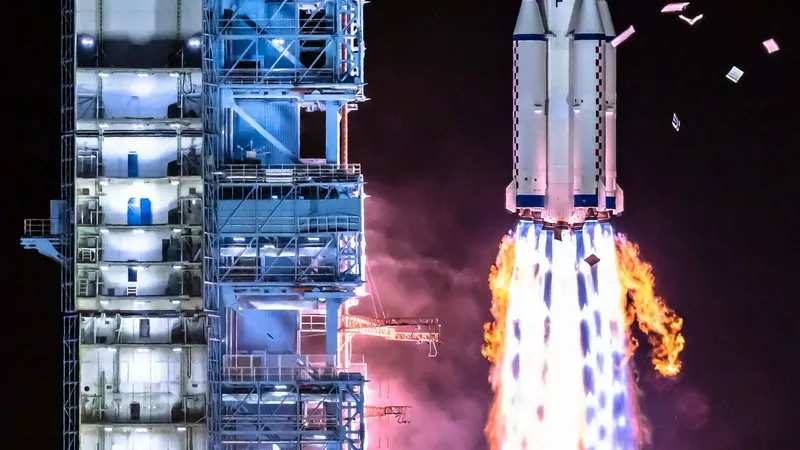
Pakistan is about to name its first astronaut. Two pilots, Muhammad Zeeshan Ali and Khurram Daud, are training in Beijing for a one-week visit to China's Tiangong space station, and only one of them will fly. Pakistan's space agency SUPARCO says the final pick is expected in mid-to-late October, Reuters reported on September 28. Whoever goes will be the first foreign astronaut to visit the Chinese station.
The mission at a glance
- Candidates: Muhammad Zeeshan Ali and Khurram Daud, both pilots
- Agencies: SUPARCO (Pakistan) and the China Manned Space Agency
- Flight: expected to be Shenzhou-24, launching from Jiuquan, China
- Job: payload specialist, running Pakistan's science experiments
- Time in orbit: about one week
- Launch date: not announced; Shenzhou-24 is listed for October 2026
Who are the two candidates?
China's space agency announced the pair on April 22, 2026, as the first foreign astronauts chosen to train for its station, after a Pakistan–China agreement signed in Islamabad in February 2025, according to CGTN. SUPARCO told Reuters they beat about 20 finalists from a pool of pilots and scientists and were screened for medical fitness, psychological resilience and tolerance of high g-forces. Since then they have been learning Mandarin, spacecraft systems, and how to eat, sleep and repair equipment in weightlessness at the China Astronaut Research and Training Center in Beijing.
What will the astronaut do in orbit?
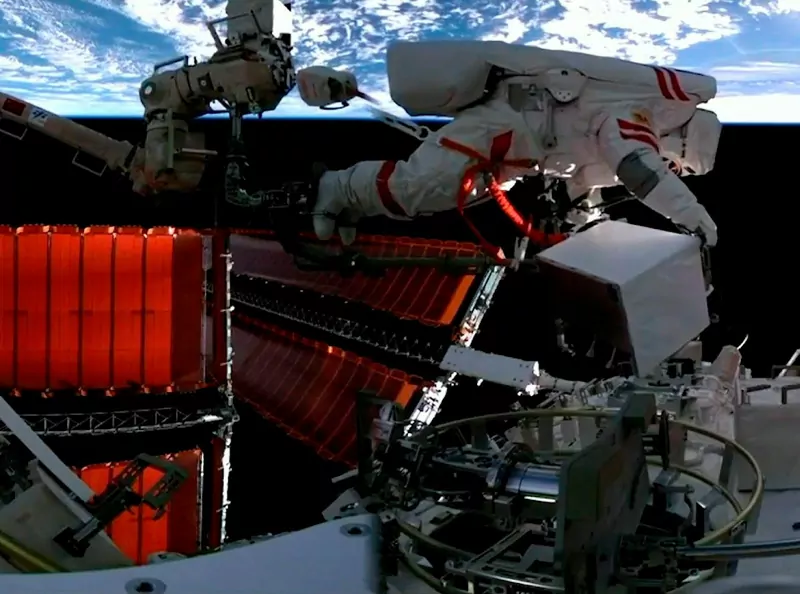
They will not fly the spacecraft. As a payload specialist, the Pakistani astronaut will run four biotechnology experiments on food security and climate change, picked by Chinese institutes from more than 300 proposals sent in by Pakistani universities. Each experiment is built and tested in SUPARCO's own labs before Chinese engineers approve it. The station has three modules, Tianhe, Wentian and Mengtian, weighs about 77 tonnes and has already hosted more than 180 experiments.
Why only one week?
Chinese crews normally stay about six months. The Pakistani visit is a short hop: the astronaut will fly a Chinese-built spacecraft, communicate in Mandarin, and come home with two members of the crew that reached the station in May, because the third of those crew members is staying for a full year.
When is the launch?
China has not said who will fly or when. Wikipedia's Shenzhou 24 page lists the flight for October 2026 and notes that China normally names its crew only the day before liftoff. Prediction: the launch should follow soon after the pick, so late October or early November looks most likely, with the name and exact date confirmed about a day ahead.

Why it matters
Only Russia, the United States and China have launched their own crewed spacecraft, and citizens of about 50 countries have flown in space since Yuri Gagarin in 1961. Pakistan has no rocket or crew capsule of its own, so it is riding on China's, and it would be the first time China has carried a foreign astronaut. Asked about a future moon flight, SUPARCO said there is "no official commitment or discussion" so far, though a Pakistani-built rover is due to fly on China's Chang'e 8 lunar mission around 2028.
Sources: Reuters via Arab News, CGTN, Global Times, Wikipedia.