Draconid meteor shower 2026: when and how to watch
The Draconid meteor shower peaks on the night of Thursday 8 October into Friday 9 October 2026. This is a good year to look: the moon is almost new, so the sky will be dark. It is also the rare shower that is best in the evening, so nobody has to get up before dawn.
Key facts
| Active | 6 to 10 October |
|---|---|
| Peak | Around 01:00 UTC on 9 October |
| Best time to look | The evening of 8 October, as soon as it is fully dark |
| How many | Up to about 10 meteors an hour under a dark sky |
| Moon | Thin crescent that rises just before dawn; new moon on 10 October |
| Best seen from | The Northern Hemisphere |
Sources: EarthSky, using American Meteor Society predictions, and the Royal Observatory Greenwich.
The peak in your time zone
The predicted peak of 01:00 UTC is 9 p.m. on Thursday in New York and 8 p.m. in Chicago. In Los Angeles it is 6 p.m., before dark, so start as soon as night falls. In London and Lagos it is 2 a.m. on Friday, in Paris 3 a.m., and in Cairo, Riyadh and Istanbul 4 a.m.
In South Asia the peak comes at sunrise on Friday, so try both the Thursday and Friday evenings. Peak times for meteor showers are estimates, and the Draconids stay active for several nights.
How to watch
- You need no telescope or binoculars. Your eyes see the widest patch of sky.
- Get away from street lights and give your eyes 20 minutes to adjust. Keep your phone screen off.
- The meteors seem to come from the head of the constellation Draco, the Dragon, which sits high in the north-west after dark. You don't need to find it. Lie back and look up.
- Draconids are slow compared with other meteors, which makes them easier to catch.
From the Southern Hemisphere, Draco barely rises, so very few Draconids are visible.
Could there be a meteor storm?
In most years the Draconids are quiet. But the shower is famous for rare surprises. In 1933 and 1946 it produced thousands of meteors an hour, and observers in Europe counted more than 600 an hour in 2011.
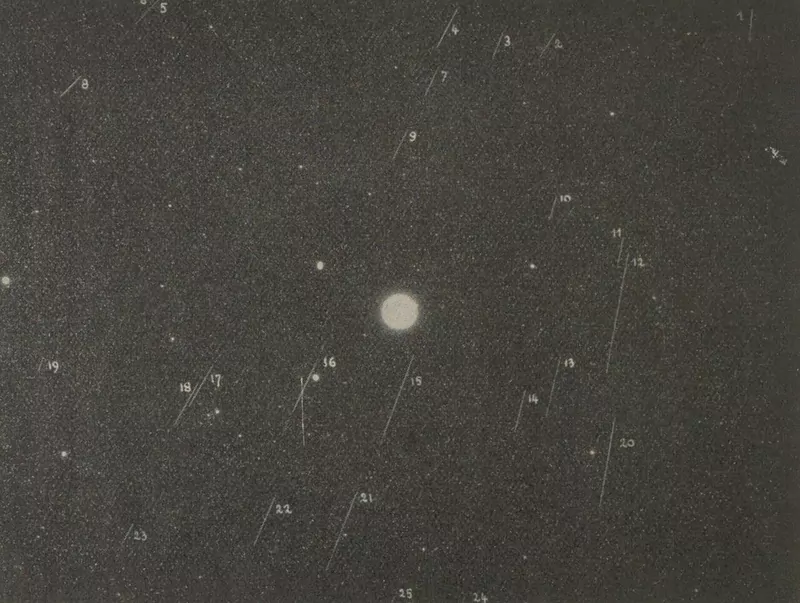
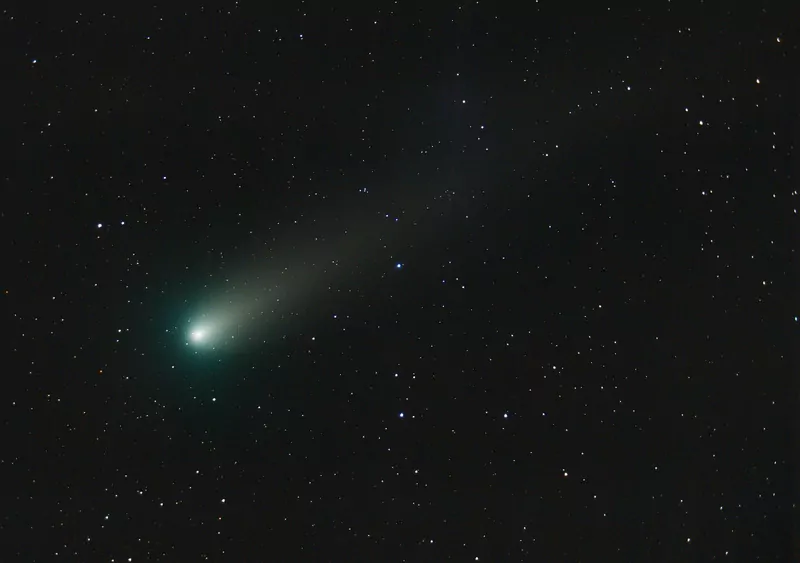
The meteors are dust left by Comet 21P/Giacobini-Zinner, which circles the sun every 6.6 years. Storms tend to happen when the comet is nearby. It made its closest pass to the sun in March 2025 and is still fairly close. So will 2026 bring a storm? EarthSky's answer: "Probably not … but you never know."
What comes next
The Orionids, made of dust from Halley's Comet, peak around 21 October.