South Africa Local Elections: ANC Slips to 30.9%, DA Gains
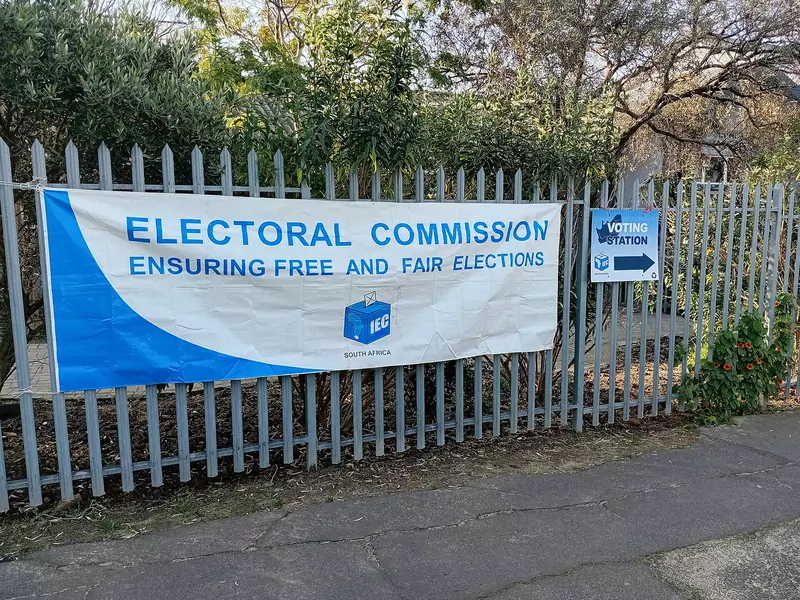
South Africa's local government elections were held on Wednesday, Nov. 4, 2026, and the results are in. With 15,269,880 votes counted, turnout was 52.3%, up 6.4 points on the 2021 local elections, according to the figures reported on Nov. 9. The ANC's national proportional-representation vote fell to 30.88%, more than 15 points below its 2021 result of 45.59%, while the DA rose 3 points to 24.75% and the uMkhonto weSizwe Party (MK), contesting for the first time, took 9.82% (IEC results dashboard, results as compiled by Wikipedia).
The DA is now the largest party in five of the eight metro councils, though it holds the only outright metro majority, in Cape Town. Election day itself ran as a public holiday, with 23,696 voting stations open from 7 am to 9 pm on the voters' roll that closed on Aug. 7 with more than 29 million registered (SAnews, Sunday Tribune).
The results at a glance
National proportional-representation votes, with the 2021 comparison:
| Party | 2026 PR vote | Change vs 2021 |
|---|---|---|
| ANC | 30.88% | down from 45.59% |
| Democratic Alliance (DA) | 24.75% | up 3 points |
| uMkhonto weSizwe Party (MK) | 9.82% | first attempt |
| Economic Freedom Fighters (EFF) | 6.24% | down 4.21 points |
| ActionSA | 6.02% | up 3.41 points |
| Inkatha Freedom Party (IFP) | 4.69% | down 1.16 points |
| South African Communist Party (SACP) | 2.29% | first attempt |
The IEC has declared the councillors elected for the 10,526 seats contested in the 8 metropolitan, 44 district and 205 local municipalities: 8,825 local-council seats, of which 4,485 are ward seats and 4,340 proportional seats, plus 707 district-council seats filled directly by the district PR ballot, with the other 60% of district seats appointed by the local councils (IEC, Polity, Nov. 12).
The metro councils: one majority, seven hung
| Metro | Seats | Largest party | Seats won | Majority? |
|---|---|---|---|---|
| City of Cape Town | 235 | DA | 133 | Yes (118 needed) |
| City of Johannesburg | 270 | DA | 91 | No (45 short) |
| City of Tshwane | 214 | DA | 74 | No (34 short) |
| Ekurhuleni | 224 | DA | 66 | No (47 short) |
| eThekwini | 223 | MK | 86 | No (26 short) |
| Nelson Mandela Bay | 120 | DA | 53 | No (8 short) |
| Buffalo City | – | ANC | – | No overall majority |
| Mangaung | – | ANC | – | No overall majority |
In Johannesburg the DA took the largest bloc from the ANC, winning 91 seats to the ANC's 63 — the ANC had held 91 in 2021 — with ActionSA on 43 and MK on 15. In Tshwane, ActionSA surged to 48 seats, second to the DA's 74, with the ANC falling to 44. In eThekwini, MK won 86 seats while the ANC fell from 96 to 37 and the DA held 57. In Nelson Mandela Bay the DA led with 53 of 120 seats. In Cape Town the DA kept its majority with 133 seats, down 2 (Wikipedia, from the IEC dashboard).
What happens next: coalitions for seven metros
With no majority in seven of the eight metros, coalitions will decide the mayors. ActionSA leader Herman Mashaba offered the DA a deal on Nov. 9: if the DA lets ActionSA's Nasiphi Moya run Tshwane, ActionSA would support DA-led governments in Johannesburg and Ekurhuleni, but not with Helen Zille, the DA's Johannesburg mayoral candidate, as Joburg mayor. The DA's answer had not been reported as of Nov. 24 (report of Nov. 9).
How the election was run: key dates
| Date | What happens |
|---|---|
| Fri. Aug. 7 | The Cooperative Governance minister proclaims the election and the voters' roll closes |
| Mon. Oct. 12 | Special-vote applications closed, at 5 pm |
| Mon. Nov. 2 and Tue. Nov. 3 | Special voting, 8 am to 5 pm, for approved applicants |
| Wed. Nov. 4 | Election day, a public holiday: voting stations open from 7 am to 9 pm |
The dates come from the IEC calendar, the proclamation and the IEC's special-vote announcement.
Voting stations: how to check where you are registered
- SMS: send your ID number to 32810 to get your voting station and your voters' roll sequence number, the IEC says (Sunday Tribune). SAnews has also described the message as “myID” followed by your ID number (SAnews).
- WhatsApp: send “Hi” to 0600 88 0000 and choose the “Am I registered” menu.
- Phone: call the IEC contact centre on 0800 11 8000, which is toll free.
- Online: the IEC's pages on voting districts and stations and its 2026 elections page.
If you have moved since you registered, you can still only vote at the station where you are registered, the IEC warns (SAnews). The roll is closed, so that cannot be changed for this election.
What to bring to vote
Bring your ID, the IEC reminds voters (IEC). The documents the IEC names for registration are a green barcoded ID book, a smart ID card or a valid Temporary Identity Certificate (SAnews). Voting stations open at 7 am and close at 9 pm, and the IEC calendar lists the same hours nationwide.
Special votes (held Nov. 2 and 3)
The IEC has approved about 2.6 million special-vote applications: 678,000 for home visits and 1.9 million for voting-station special votes, chief electoral officer Sy Mamabolo said (SABC News). Special voting is on Monday, Nov. 2 and Tuesday, Nov. 3, from 8 am to 5 pm (IEC calendar).
- Home visits: for people who cannot go to a voting station because of a physical condition, when IEC officials visit approved voters at home.
- Voting-station special votes: for people who can go to their station but cannot vote there on election day, such as those in essential services, security services and the media, who will vote on Nov. 2 or 3 (ECR).
The application window closed on Oct. 12, so you cannot apply now. If you do not have an approved special vote, you vote on Nov. 4.
Court ruling on candidate lists: the date has not changed
The Constitutional Court ruled on Thursday, Oct. 15 that the IEC must include 181 ANC candidates, 51 ward candidates and 130 proportional representation candidates in six municipalities in the Eastern Cape, KwaZulu-Natal and Mangaung, after they were left off because the party did not click “submit as final” before the Aug. 28 deadline (Sowetan). The IEC said it must print 6.6 million extra ballots, bringing the total to 33 million, of which 27 million were already printed (EWN). On Friday, Oct. 16 IEC chairperson Mosotho Moepya said the commission would give the same treatment to 32 other parties that had nominated candidates and paid deposits but had not submitted final lists (IOL). Voting is still on Wednesday, Nov. 4.
What is on the ballot?
All councillors are being elected in the 8 metropolitan and 205 local municipalities, and 40% of councillors in the 44 district municipalities. Metro and local-municipality voters elect a ward councillor and cast a party vote, which fills the proportional seats. Voters outside the metros get a third ballot for their district council, Wikipedia's summary of the elections explains. The country has 4,488 municipal wards (SAnews).
Matric exams and grant payments around election day
- Matric: no matric papers are written on Nov. 3, 4, 5 and 9, the Department of Basic Education's timetable shows. See our matric timetable page.
- Grants: SASSA has moved the November grant payments to Oct. 30, Nov. 2 and Nov. 3 because of the election. See our SASSA payment dates page.
Results are from the IEC's results dashboard, final figures reported on Nov. 8–9, 2026, as compiled by Wikipedia and ESP; the post-election process from the IEC's news release and Polity (Nov. 12). Election-day dates, hours and numbers are from the IEC calendar, SAnews, EWN, SABC News, Sunday Tribune, Jacaranda FM and ECR, as published up to Oct. 16, 2026. Rechecked Nov. 24. Coalition talks change daily, so check the news for the latest on each metro.